
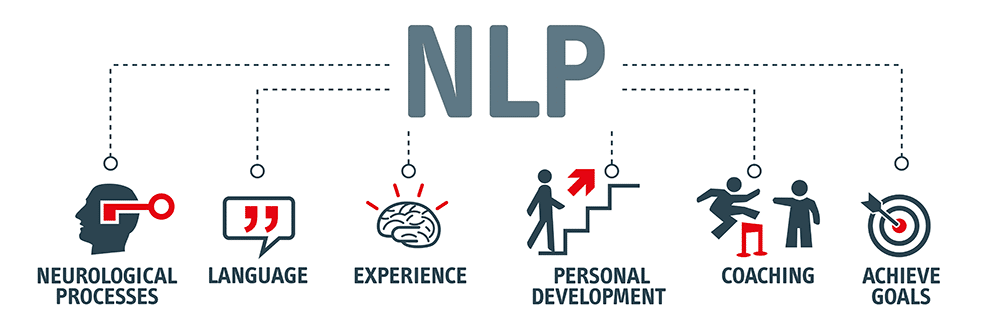
Neuro-linguistic Programming models (NLP models) are frameworks and techniques intended to help people understand how patterns of thought, language, and behavior interact. Developed in the 1970s by Richard Bandler and John Grinder, NLP was influenced by observations of therapists and communicators whom its founders considered particularly effective.
NLP models are commonly used in coaching, communication training, personal development, sales, and some therapeutic settings. They aim to identify recurring mental and behavioral patterns and provide methods for changing them.
However, it is important to distinguish NLP’s popularity from its scientific standing. Many of NLP’s broader theoretical claims have not received strong support from controlled research. As a result, NLP is generally better understood as a collection of communication and self-development frameworks rather than an established scientific theory of how the brain or language works.
What Does Neuro-linguistic Programming Mean?
The name Neuro-linguistic Programming combines three ideas:
- Neuro refers to thoughts, perceptions, emotions, and other internal experiences.
- Linguistic refers to language and the ways people use words to describe and communicate their experiences.
- Programming refers to recurring patterns of thinking and behavior that NLP practitioners believe can be identified and modified.
In simple terms, NLP proposes that people develop patterns for interpreting experiences and responding to them. By becoming more aware of these patterns, practitioners attempt to change unhelpful responses and develop alternatives.
What Are NLP Models?
NLP models are structured ways of examining communication, subjective experience, goals, and behavior. Rather than representing a single unified model, NLP contains numerous frameworks and techniques.
Some focus on how people describe experiences. Others concentrate on goal setting, changing emotional responses, building rapport, or examining how someone performs a particular skill.
Here are some of the best-known Neurolinguistic Programming models.
1. The NLP Communication Model
The NLP Communication Model attempts to explain how people process events and create an internal representation of what happens around them.
According to this framework, people do not respond directly to every detail of reality. Instead, they filter experiences through factors such as:
- Previous experiences
- Beliefs and values
- Memories
- Language
- Expectations
- Cultural background
- Current emotional state
NLP describes three broad filtering processes: deletion, distortion, and generalization.
Deletion occurs when some information receives little or no conscious attention. Generalization involves applying previous experiences or rules to new situations, while distortion refers to interpreting information in ways that alter its perceived meaning.
The practical idea behind the model is straightforward: two people can experience the same event and interpret it very differently.
2. The Meta Model
The Meta Model is one of NLP’s best-known language frameworks. It consists of questions designed to clarify vague, generalized, or incomplete statements.
For example, someone might say:
“Nobody listens to me.”
A Meta Model approach might ask:
“Who specifically doesn’t listen to you?”
Or consider:
“I can’t succeed at this.”
A clarifying question could be:
“What specifically prevents you from succeeding?”
The purpose is not simply to challenge the speaker. It is to uncover assumptions and encourage more precise descriptions of an experience or problem.
This type of questioning can be useful in coaching, management, problem-solving, and everyday communication, although the usefulness of clarification itself should not be taken as evidence for all of NLP’s theoretical claims.
3. The Milton Model
The Milton Model is often presented as a counterpart to the Meta Model.
It was inspired by NLP’s founders’ observations of psychiatrist and hypnotherapist Milton H. Erickson. Whereas the Meta Model emphasizes specificity, the Milton Model deliberately uses broader and more permissive language.
For example, phrases such as “you may begin to notice…” leave aspects of the meaning open to interpretation.
Within NLP, this model is associated particularly with hypnosis, storytelling, persuasion, and therapeutic communication.
4. Representational Systems
Another well-known NLP concept involves representational systems. NLP practitioners often classify aspects of subjective experience according to sensory categories:
- Visual — images and what a person sees
- Auditory — sounds and internal dialogue
- Kinesthetic — physical sensations and feelings
This framework is frequently abbreviated as VAK.
For instance, one person might describe an experience using visual language such as “I can see where this is going,” while another might say, “That sounds right.”
NLP training has sometimes claimed that people possess reliably identifiable “preferred representational systems” and that matching communication to them improves outcomes.
5. Submodalities
Submodalities are the finer characteristics NLP assigns to sensory representations.
If someone imagines a picture, for example, NLP might examine whether that mental image is:
- Bright or dark
- Large or small
- Near or far
- Moving or still
- Clear or blurry
For an imagined sound, characteristics might include volume, pitch, location, or speed.
NLP submodality techniques sometimes involve intentionally changing these qualities with the goal of altering the emotional impact associated with a memory or imagined event.
6. Anchoring
Anchoring is an NLP technique based on associating a particular stimulus with an emotional or psychological state.
For example, an NLP practitioner might ask someone to recall a moment when they felt confident and then pair that experience with a particular gesture. The intention is for the gesture eventually to become associated with the confident state.
The general idea of cues becoming associated with emotional or behavioral responses overlaps with established concepts in psychological learning.
7. Reframing
Reframing involves changing the interpretation assigned to a situation.
Imagine someone thinking:
“I failed, so I’m terrible at this.”
A different frame might be:
“This result shows me what I need to improve before my next attempt.”
The event has not changed, but its interpretation has.
Reframing is not unique to NLP. Similar concepts appear in established psychological approaches, communication practices, negotiation, and coaching. Within NLP, however, reframing is a central technique for encouraging alternative perspectives and responses.
8. NLP Logical Levels
The Logical Levels framework, commonly associated with Robert Dilts’ development of NLP, organizes change into different levels.
These are often presented as:
- Environment — Where and when does something happen?
- Behavior — What does the person do?
- Capabilities — How do they do it?
- Beliefs and values — Why is it important?
- Identity — Who does the person understand themselves to be?
- Purpose or connection — What larger system or purpose does it relate to?
The framework can be used as a structured set of prompts for thinking about a problem.
For example, a performance problem may involve more than behavior. A person could lack a particular skill, have conflicting priorities, or be working in an environment that makes the desired behavior difficult.
9. The NLP Strategy Model
In NLP, a strategy refers to a sequence of internal and external processes associated with producing a particular result.
Suppose someone is consistently good at making decisions. An NLP practitioner might investigate questions such as:
- What does the person notice first?
- What questions do they ask themselves?
- Do they visualize possible outcomes?
- How do they compare alternatives?
- How do they know when they have enough information?
- What causes them to make the final decision?
The goal is to identify the sequence and potentially reproduce useful parts of it in other contexts.
10. Modeling
Modeling is one of the foundational ideas behind NLP.
Rather than asking only what successful people achieve, modeling asks how they achieve it. Practitioners may examine someone’s observable behavior, communication, decision-making, beliefs, and reported internal processes.
A simplified modeling process might involve:
- Identifying someone who consistently demonstrates a desired skill.
- Observing their behavior and communication.
- Asking questions about their decision-making process.
- Identifying recurring patterns.
- Testing which elements appear important.
- Practicing and refining those elements.
This concept contributed to the name “Neurolinguistic Programming”: the founders attempted to create transferable models from patterns they observed in accomplished communicators and therapists.
What Are NLP Models Used For?
Neurolinguistic Programming models have been applied in a wide variety of contexts, particularly:
Coaching and personal development: Practitioners may use NLP exercises to explore goals, habits, beliefs, confidence, and communication.
Business communication: Some training programs incorporate NLP concepts into presentations, negotiations, leadership, and interpersonal communication.
Sales: Rapport, questioning, reframing, and language patterns are sometimes taught as ways of understanding customers and communicating value.
Education: Certain NLP-inspired approaches focus on learning strategies, sensory descriptions, motivation, and communication.
Therapeutic settings: Some practitioners use NLP techniques to address fears, habits, emotional responses, or personal goals.
What Is an Example of an NLP Model in Practice?
Consider someone who says:
“I’m terrible at public speaking.”
An NLP-style exploration might begin by questioning the generalization.
Step 1: Clarify the statement.
“Are there situations where speaking in front of others feels easier?”
Step 2: Identify the internal experience.
“What do you imagine happening before you give a presentation?”
Step 3: Examine the interpretation.
“What does feeling nervous mean to you?”
Step 4: Reframe the response.
Could nervousness also indicate preparation, energy, or concern about performing well?
Step 5: Model successful behavior.
What do effective speakers do before and during presentations that could be practiced?
This example demonstrates how several NLP models can be combined. It also illustrates that many useful elements—such as clarifying generalizations and practicing effective behaviors—can be understood without accepting every theoretical claim made by NLP.
NLP Models vs. NLP Techniques
The terms NLP models and NLP techniques are sometimes used interchangeably, but they can refer to slightly different things.
A model provides a framework for understanding or examining an experience. The Meta Model and Logical Levels are examples.
A technique is generally a procedure intended to produce a particular change. Anchoring and some forms of reframing are commonly presented this way.
In practice, NLP courses frequently combine both.
Benefits and Limitations of NLP Models
NLP frameworks can encourage people to examine their language, assumptions, goals, and habitual responses more carefully. Some people also find structured questioning and reframing useful for reflection and communication.
The limitations are equally important.
NLP terminology can sometimes give speculative ideas an appearance of neurological or psychological certainty that the evidence does not justify. Results also depend heavily on the practitioner, context, and specific technique being used. NLP models are therefore best approached as frameworks to evaluate critically.
So, what are Neurolinguistic Programming models? They are frameworks developed within NLP for examining how people communicate, interpret experiences, develop behavioral patterns, and pursue change.
Frequently Asked Questions About Neurolinguistic Programming Models
What are Neurolinguistic Programming models?
Neurolinguistic Programming models are frameworks used within NLP to examine patterns of language, thought, subjective experience, and behavior. Examples include the Meta Model, Milton Model, representational systems, Logical Levels, reframing, anchoring, and modeling.
What are the main models of NLP?
There is no single universally accepted list. Commonly taught NLP models include the Communication Model, Meta Model, Milton Model, representational systems, submodalities, Logical Levels, strategies, and modeling.
What is the most important NLP model?
Modeling is arguably the foundational concept because NLP originally developed through attempts to identify and reproduce patterns associated with effective therapists and communicators. The Meta Model is also one of its best-known language frameworks.
What does VAK mean in NLP?
VAK stands for Visual, Auditory, and Kinesthetic. When smell and taste are included, the framework is often called VAKOG: Visual, Auditory, Kinesthetic, Olfactory, and Gustatory.
Can NLP change behavior?
NLP exercises are intended to help people examine and modify patterns of thinking and behavior. Whether they produce meaningful change depends on the technique, individual, context, and goal.

Co-founder and CEO of iNLP Center
Hope is an accomplished businesswoman and entrepreneur with a passion for empowering others to achieve their full potential.
With a Bachelor of Fine Arts (BFA) from California State University, Fullerton, and postgraduate education at Harvard Business School, Hope brings a unique blend of creativity, business acumen, and personal development expertise to her endeavors.
Hope’s entrepreneurial spirit shines through in her establishment of the iNLP Center, which has become a leading provider of NLP training and life coaching certification programs.