

Navigating the daily realities of raising a neurodiverse child often requires rewriting the traditional parenting playbook entirely. When conventional discipline and standard communication techniques fall short, it can leave parents feeling isolated, exhausted, and searching for answers that actually respect their child’s unique brain wiring. Rather than offering quick fixes or rigid, compliance-based rules, the iNLP Center’s NLP practitioner training curriculum provides a framework rooted in deep empathy, self-awareness, and cognitive science. By teaching parents to decode subconscious behavioral patterns, adapt their own emotional responses, and tailor their communication to match how their child naturally processes information, the program transforms daily friction into moments of profound connection.
Through the comprehensive online modules and live training sessions, the course systematically provides NLP strategies for parenting neurodiverse children through several key concepts:
1. Embracing Behavioral Flexibility over “Squashing” Behaviors
Traditional parenting or schooling often attempts to force children to sit still and suppress habits like fidgeting to help them focus. In NLP, Behavioral Flexibility teaches parents that different minds process information differently. The program emphasizes that for many neurodiverse children, movement (kinesthetic processing) is a requirement for learning and maintaining alertness. Rather than trying to correct a child’s squirming, parents learn to facilitate it productively.
2. Tailoring Communication to the Child’s Representational System (VAK Model)
A cornerstone of the NLP Practitioner course is the VAK (Visual, Auditory, Kinesthetic) Representational System. Parents learn to observe their child’s eye movements, physical cues, and language patterns to determine how they process the world:
- Some neurodiverse children process information visually (requiring pictures, schedules, or mind maps).
- Some process auditorily (relying heavily on precise tone and verbal instructions).
- Others are purely kinesthetic (needing a hands-on approach and physical interaction).By mastering this, parents can bridge communication gaps, reduce meltdowns, and tailor tasks to their child’s unique brain wiring.
3. Understanding Differing Motivation Strategies
The course covers Meta Programs, which are the unconscious mental filters that guide human behavior and motivation. This NLP strategy teaches parents to recognize how their child is uniquely motivated:
- Is your child motivated Toward a positive reward, or Away from a negative consequence?
- Do they thrive on Vague instructions that leave room for creative problem-solving, or do they need a highly Specific, rigid structure to combat executive dysfunction?Recognizing these filters prevents parental frustration and stops the cycle of trying to motivate a neurodiverse child using methods that actively clash with their neurology.
4. Intentional Rapport Building
The Rapport and Other People module teaches parents how to cultivate deep trust and safety through non-verbal matching and mirroring. For a neurodiverse child who may struggle with social communication or suffer from sensory overload, a parent who consciously knows how to build a sensory-friendly, low-pressure bubble of rapport can drastically lower the child’s stress levels and help them feel deeply understood.
5. Managing Parental Stress and Triggers
Parenting a neurodiverse child can create an overactive Default Mode Network (DMN)—the part of the brain that constantly churns out stress, anxiety, and autopilot responses. The course helps parents identify their own “negative anchors” (triggers) and provides tools for emotional regulation. By managing their own DMN and learning how to step into a “State of Excellence,” parents can remain calm, objective, and emotionally flexible during challenging meltdowns or high-stress moments.
Ultimately, mastering NLP strategies for Parenting Neurodiverse Children is not about trying to change who your child is; it is about changing how you connect with them. By trading rigid expectations for behavioral flexibility and sensory acuity, you stop managing symptoms and start nurturing their unique potential. The tools provided in this certification don’t just reduce the daily friction at home—they build a lifetime bridge of trust, validation, and mutual understanding between you and your child.
Learn more about the iNLP Center NLP Training.
(Note: While the NLP Practitioner course provides the fundamental tools for communication, behavior, and stress management, the iNLP Center also offers a specialized Neurodiversity / ADHD Coach Training extension for those looking to heavily lean into the social model of disability, masking, and executive function mapping.)
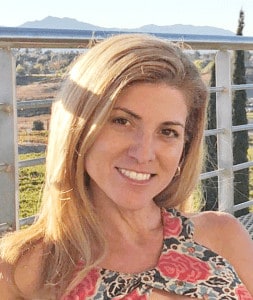
Co-founder and CEO of iNLP Center
Hope is an accomplished businesswoman and entrepreneur with a passion for empowering others to achieve their full potential.
With a Bachelor of Fine Arts (BFA) from California State University, Fullerton, and postgraduate education at Harvard Business School, Hope brings a unique blend of creativity, business acumen, and personal development expertise to her endeavors.
Hope’s entrepreneurial spirit shines through in her establishment of the iNLP Center, which has become a leading provider of NLP training and life coaching certification programs.