

The desire to help people navigate the complexities of existence is a noble pursuit, but the path to becoming a professional “helper” is often shrouded in confusion. Prospective students and career-changers frequently find themselves at a crossroads: Should they pursue a traditional Psychology Degree, or is Life Coach Training the more efficient route to their goals?
While both fields aim to improve the human condition, they operate on different philosophies, legal frameworks, and practical methodologies. Understanding these distinctions—and knowing where they intersect, such as with programs like the iNLP Center—is essential for anyone looking to make an informed career choice.
1. Academic Rigor and Educational Foundations
The Psychology Degree
A degree in psychology is a formal academic journey rooted in the scientific study of the mind and behavior.
- Undergraduate Level: Provides a broad overview of human development, social behavior, and research statistics.
- Graduate Level (Master’s or Doctorate): This is where specialization occurs. To practice as a licensed therapist or psychologist, one must typically earn a Master’s in Counseling or a PhD/PsyD in Clinical Psychology.
- Timeline: Expect a minimum of 6 to 10 years of higher education to become a licensed professional.
Life Coach Training
Life coaching is a specialized vocational training focused on the “here and now” and future-oriented goal setting.
- Structure: Training is typically delivered through private institutions or centers rather than traditional universities.
- Focus: It emphasizes core competencies like active listening, powerful questioning, and accountability structures.
- Timeline: Certification can take anywhere from 6 months to 2 years, depending on the depth of the program and the level of certification sought (e.g., through the International Coaching Federation).
2. Clinical Scope vs. Performance Scope
The most significant difference lies in the mental health status of the client.
| Feature | Psychology/Therapy | Life Coaching |
| Primary Goal | Healing, recovery, and symptom reduction. | Growth, achievement, and optimization. |
| Time Orientation | Often explores the past to resolve trauma. | Focuses on the present and the future. |
| Clinical Diagnosis | Licensed to diagnose and treat DSM-5 disorders. | Strictly prohibited from diagnosing or treating mental illness. |
| Client Status | Patients seeking relief from dysfunction. | Functional individuals seeking higher performance. |
3. Regulation and Licensure
Psychology is a heavily regulated medical profession. To practice, you must be licensed by a state board, which requires thousands of supervised clinical hours and passing rigorous national exams (like the EPPP). This ensures a high standard of consumer protection.
Life Coaching is currently self-regulated. While there are prestigious bodies like the International Coaching Federation (ICF) that set high ethical standards, there is no legal requirement to hold a license to call yourself a “Life Coach.” This makes the choice of training program incredibly important for credibility.
4. The iNLP Center: Bridging the Gap
Many individuals find themselves caught in the middle: they want the depth and “brain science” of psychology but prefer the dynamic, goal-oriented nature of coaching. This is where the iNLP Center distinguishes itself.
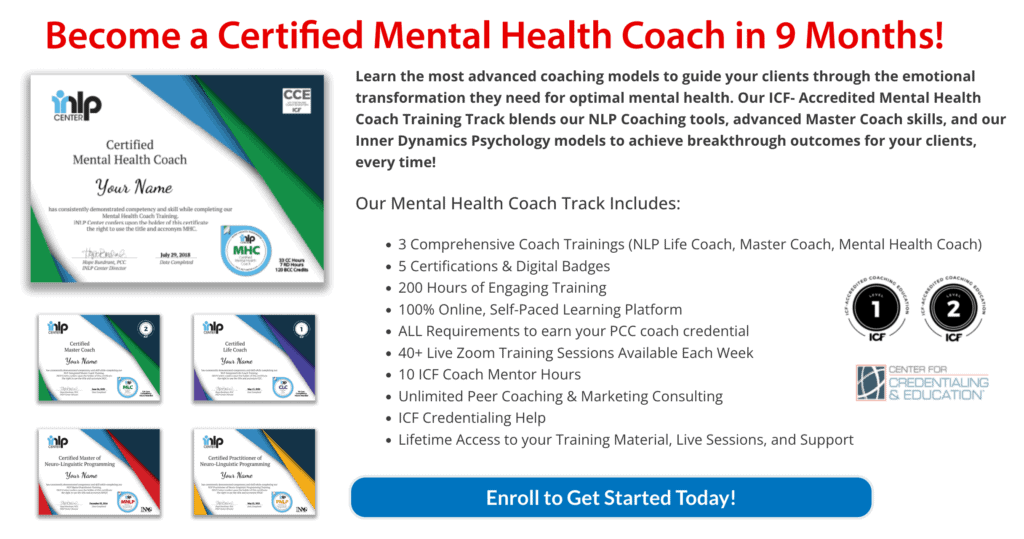
The iNLP Center offers psychology-based life coach training. Unlike programs that rely solely on “motivational” techniques, iNLP integrates Neuro-Linguistic Programming (NLP) with established psychological principles.
Why a Psychology-Based Approach Matters
By using a psychological lens, iNLP-trained coaches understand why people get stuck, not just that they are stuck. This includes:
- Neural Rewiring: Understanding how the brain creates habits and how to effectively shift them.
- Inner Dynamics: Addressing the deeper patterns of the subconscious mind that often sabotage conscious goals.
- Integration: While they do not treat pathology, iNLP coaches are better equipped to recognize the boundaries between coaching and therapy, ensuring greater safety and efficacy for their clients.
5. Career Outcomes and Daily Life
The Psychologist’s Day
A psychologist often works in clinical settings, hospitals, or private practices. Their day is spent helping people manage depression, anxiety, PTSD, or personality disorders. Much of the work is “deep-sea diving” into a person’s history to find the roots of current pain.
The Life Coach’s Day
A life coach often operates as an entrepreneur or within a corporate environment. Their day might involve helping an executive improve their leadership skills, assisting a client in a career transition, or helping someone find balance in their personal life. The sessions are energetic, action-oriented, and involve “homework” for the client to complete between meetings.
6. How to Choose Your Path
If you are trying to decide between these two paths, ask yourself these three questions:
- Who do I want to help? If you feel called to work with people suffering from severe trauma or clinical mental illness, a Psychology Degree is the only legal and ethical route.
- How much time/money can I invest? A PhD is a massive financial and temporal commitment. If you want to start helping people within a year, Life Coach Training is more accessible.
- What is my philosophy of change? If you believe people need to heal the past to move forward, look toward Psychology. If you believe people need a roadmap and a mindset shift to unlock their potential, look toward a psychology-based coaching program like iNLP.
The choice between life coach training and a psychology degree isn’t necessarily about which is “better,” but which is appropriate for your goals. Psychology provides the deep, clinical roots necessary for mental health treatment, while life coaching provides the wings for personal and professional soaring.
But, for those who want the best of both worlds—the scientific foundation of psychology with the forward momentum of coaching—centers like iNLP offer a sophisticated middle ground, ensuring that as a coach, you aren’t just giving advice, but facilitating profound, brain-based transformation.

Co-founder and CEO of iNLP Center
Hope is an accomplished businesswoman and entrepreneur with a passion for empowering others to achieve their full potential.
With a Bachelor of Fine Arts (BFA) from California State University, Fullerton, and postgraduate education at Harvard Business School, Hope brings a unique blend of creativity, business acumen, and personal development expertise to her endeavors.
Hope’s entrepreneurial spirit shines through in her establishment of the iNLP Center, which has become a leading provider of NLP training and life coaching certification programs.