

Imagine you’re facilitating a group coaching session with six participants.
One person speaks confidently and frequently. Another seems hesitant to share. Two participants are offering advice to everyone else, while someone in the background appears increasingly disconnected from the conversation.
What do you do?
This is where group coaching becomes more than individual coaching with additional people.
Effective group coaching requires the ability to manage multiple conversations, encourage meaningful participation, and help individuals learn from a shared experience.
A skilled group coach doesn’t need to control every interaction. Instead, the coach creates the structure and conditions that allow learning to emerge.
If you’re exploring this coaching format for the first time, our guide to what group coaching is explains its structure, benefits, and differences from individual coaching.
Here are seven essential group coaching facilitation skills and how to begin developing them.
1. Create Clear Agreements Before the Conversation Begins
An effective group coaching session starts before anyone discusses their goals. Participants need to understand why they’re together, what they can expect, and how they will participate. Group agreements might address confidentiality, respectful communication, equal opportunities to contribute, time boundaries, and the difference between coaching and giving advice.
For example, you might ask:
“What would help everyone feel comfortable contributing to this group?”
Then allow participants to identify the conditions they need. People are often more willing to honor expectations they have helped create.
These agreements should also recognize that participants may choose not to share personal information. Respecting that choice is part of creating a supportive environment. The facilitator remains responsible for clarifying the limits of confidentiality and addressing concerns that arise.
2. Ask Questions That Involve the Whole Group
In individual coaching, the coach directs questions toward one client.
In group coaching, questions can invite everyone to participate, even when only one person speaks initially.
Consider the difference between asking:
“Sarah, what would help you feel more confident speaking up?”
and asking:
“What tends to help each of us feel more confident when our ideas matter?”
The first question focuses on Sarah, but the second creates an opportunity for everyone to reflect. Both may be useful, but they serve different purposes.
A skilled group coach learns when to explore an individual’s experience and when to bring the conversation back to the group.
Useful questions include:
- What are you noticing as you listen to one another?
- Which perspective feels different from your own?
- What common theme is emerging?
- What might each of you take from this discussion?
These questions invite participants to become active contributors rather than passive observers.
3. Manage Participation Without Forcing It
One of the most challenging group coaching skills is balancing participation. Some participants process their thoughts by speaking. Others prefer time to reflect before responding. The most talkative participant isn’t necessarily the most engaged, and a quiet participant isn’t necessarily disengaged. A good group coach creates different opportunities for participation.
You might begin with 30 seconds of individual reflection before inviting people to share. You might use a chat response, paired discussion, a voluntary round, or a short written exercise.
For an online group, inviting participants to type one sentence into the chat can bring additional voices into the conversation without requiring everyone to speak aloud.
The goal is not equal speaking time in every moment. The goal is meaningful access to participation.
When one person dominates, the coach can respectfully redirect:
“Let’s hear a few additional perspectives before we continue.”
When someone remains quiet, the coach might offer:
“You’re welcome to add something in the chat or simply reflect for now.”
These small choices can change the experience of the entire group.
4. Recognize Patterns Across Different Experiences
A distinctive benefit of group coaching is the opportunity to identify patterns.
Suppose four participants are exploring confidence at work. One says they struggle with presenting ideas. Another fears negative feedback. A third avoids asking questions because they don’t want to appear inexperienced.
At first, these sound like different problems. But the coach might notice a common theme: concern about how others will judge them. Rather than assigning that interpretation, the coach can invite the group to examine it.
“I’m hearing several experiences involving how others might respond. What similarities or differences are you noticing?”
The question creates an opportunity for shared awareness without assuming everyone experiences the issue in the same way. This skill requires active listening, curiosity, and the ability to hold several perspectives at once.
The ICF Core Competencies provide an important foundation for coaching partnerships, while group coaching adds the complexity of working with multiple participants and their interactions.
5. Facilitate Peer Learning Instead of Becoming the Expert
When several people ask for help, the temptation is often to start teaching, but coaching is different from delivering answers.
Imagine a participant says:
“I want to be more organized, but I never follow through on my plans.”
A trainer might present an organizational system.
A consultant might recommend a particular planning tool.
A group coach could ask:
“What have others discovered about following through on commitments?”
Participants may then describe strategies, barriers, and unexpected discoveries from their own experiences and the coach can help each person consider which ideas fit their circumstances. This distinction is essential: the group isn’t expected to agree on one correct solution. Each participant remains responsible for choosing what is useful.
There may be appropriate moments for sharing information, particularly in a structured educational program. But if most of the session is devoted to instruction, the experience has shifted away from coaching.
6. Turn Group Insights Into Individual Action
A productive group discussion doesn’t automatically lead to meaningful change. Participants need opportunities to connect their insights with their own goals.
After a discussion about communication confidence, the coach might ask:
“What is one thing you’re willing to try before our next session?”
One participant decides to ask a question in their next team meeting. Another chooses to prepare one talking point before a presentation. And, a third decides to notice when they avoid speaking because they assume others will disagree. The insights may have emerged collectively, but the actions are personal.
This is one reason iNLP Center’s Group Coaching Training emphasizes integration—helping participants translate awareness into meaningful action beyond the session.
7. Adapt Your Coaching Techniques to Group Dynamics
A coach who has learned effective individual techniques already has a valuable foundation. The next challenge is adapting those techniques to different people simultaneously.
For example, a visualization exercise may be useful for helping participants imagine a desired outcome. However, not everyone will experience the exercise in the same way.
A group coach needs to give flexible instructions, explain the purpose, offer participation choices, and create space for different insights afterward. The same principle applies to NLP-integrated approaches such as reframing, perceptual positions, and anchoring. The techniques are not simply performed on the group. They must be adapted to participants’ goals, context, accessibility needs, and the structure of the session.
Coaches who want to explore more specialized techniques can also learn about advanced NLP approaches to group coaching, including perceptual positions, outcome setting, and state management.
Our Group Coaching Certification Training includes information gathering, Group-Talk, transformation models, integration, and practical group coaching experience.
A Simple 60-Minute Group Coaching Session Structure
Coaches can adapt a session to the goals of a particular group, but a consistent structure helps participants know what to expect.
| Time | Activity | Purpose |
|---|---|---|
| 5 minutes | Welcome and agreements | Establish focus and safety |
| 10 minutes | Check-in and goals | Connect each person to the topic |
| 10 minutes | Individual reflection | Encourage self-awareness |
| 20 minutes | Guided group exploration | Invite perspectives and peer learning |
| 10 minutes | Personal action planning | Turn insights into commitments |
| 5 minutes | Closing reflection | Capture takeaways and next steps |
This is an illustrative agenda, not a rigid formula. Some groups need additional time for processing, while others benefit from longer exercises or deeper individual exploration. The key is making sure the structure supports coaching rather than replacing it.
Once you’ve developed a session structure, the next consideration is creating a sustainable service. Our guide to group coaching prices explains how to calculate rates based on participant numbers, program length, and delivery costs.
A Practical Tool: Four Questions That Improve Any Group Conversation
You don’t need to be a professional group coach to practice better facilitation.
The next time you’re participating in a meeting, workshop, or group discussion, try these four questions.
Focus: What do we need to accomplish?
Invite: What else should we consider?
Connect: Where do our ideas overlap?
Act: What can we agree to try next?
These questions help move a group from unfocused discussion toward shared understanding and concrete action. For a professional group coach, the same sequence can be adapted to support individual insight and accountability.
How Do You Know Whether a Group Coaching Session Was Effective?
Success isn’t measured by how much the coach speaks or how lively the discussion becomes. You can gather feedback through brief reflections, end-of-session questions, and progress check-ins.
Better questions to determine the effective of the session include:
- Did participants explore something meaningful?
- Were different perspectives respected?
- Did people identify their own insights?
- Did participants leave with actions relevant to their goals?
You should also evaluate your own facilitation.
- Were you overly directive?
- Did one participant receive most of the attention?
- Did you move too quickly into solutions?
- Did you create space for learning that you hadn’t anticipated?
Group coaching facilitation develops through practice, observation, feedback, and continual adjustment.
Develop the Skills to Coach Groups With Confidence
Managing group dynamics is a specialized skill. The coach needs to balance individual needs with shared exploration, facilitate participation without forcing it, and help participants turn learning into action.
At iNLP Center, our Group Coaching Certification Training helps coaches develop these capabilities through structured learning, NLP-integrated models, live demonstrations, and practical application. The program includes seven modules and 42 units, with opportunities to practice and receive trainer feedback.
If you’re already an individual coach, understanding the differences between group coaching and one-on-one coaching can help you decide how to incorporate group services into your practice.
Interested in becoming a more effective group coach?
Explore iNLP Center’s Group Coaching Certification Training and discover how to facilitate group experiences that encourage meaningful insight, collaboration, and lasting application.
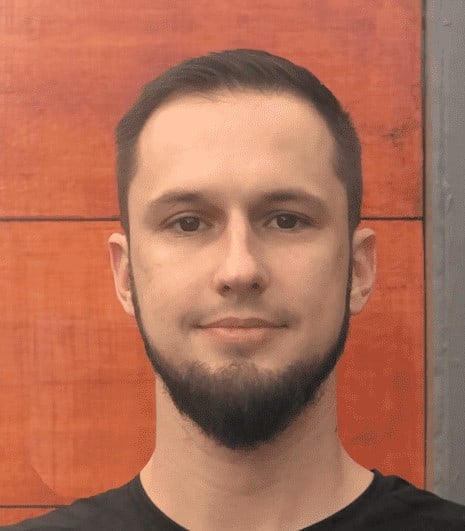
Rafael is located in Paraná, Brasil. After graduating with a bachelor’s degree in business administration and specializing in higher education teaching at the Faculdade Assis Gurgacz, Rafael spent a period acting as an entrepreneur in different branches. Having taken personal development courses he began to create tools that helped people achieve goals. His goal was to help his friends and family, he did not imagine that years later he would improve his tools by studying Coaching and NLP. Rafael has already helped thousands of people change their attitudes and find out what really matters to be happy. Rafael earned his NLP Trainer’s certificate at iNLP Center is now the director of the iNLP Center’s Portuguese online training center.