


It is completely understandable to feel overwhelmed by all the thoughts running through your mind. This happens on a daily basis to many people, especially highly intelligent and faster processor types. However, when you are trained in NLP (Neuro-Linguistic Programming), we often view overwhelm not as a lack of capacity, but as a structural issue in how thoughts are being processed.
If your thoughts feel like a “wall of noise,” it’s usually because they are all competing for the same mental space at the same height, volume, and intensity.
Here are three practical, NLP-informed ways to lower the volume:
1. Change the “Submodalities”
In NLP, we look at the qualities of your thoughts. If your internal dialogue is loud, fast, and feels like it’s screaming from right in front of your face, try this:
- Move the sound: Imagine moving the “voice” of your thoughts to your big toe or behind your left shoulder.
- Change the tone: Give your “overwhelmed” voice the voice of a cartoon character (like Mickey Mouse). It is very difficult to feel panicked by a thought that sounds ridiculous.
2. The “External Hard Drive” Method
Overwhelm often happens because you are using your working memory to store a “To-Do” list rather than using it for “Thinking.”
- The Brain Dump: Spend 10 minutes writing every single thought down on paper. Don’t organize them. Just get them out.
- The Result: Once the brain sees the thought is “saved” externally, it often stops the “open loop” reminder cycle, which lowers your mental tension.
3. Use Peripheral Vision (The “Hakala” State)
Overwhelm usually comes with “tunnel vision,” where you are hyper-focused on the problem. You can manually reset your nervous system:
- Pick a point on the wall above eye level.
- While keeping your eyes on that point, begin to expand your awareness to the sides, noticing what you can see in your peripheral vision without moving your eyes.
- This physiological shift moves you from a “stress” state (sympathetic) to a “learning/calm” state (parasympathetic), making thoughts feel more distant and manageable.

Here is a quick 2-minute “Mental Filing” exercise to help categorize overwhelming thoughts:
This exercise is designed to help your brain move from “panicked processing” to “organized observation.” Let’s do this together right now.
Take a deep breath, and let’s categorize that “wall of noise” into three distinct files.
Step 1: The “Not Today” Bin
Close your eyes for a moment. Scan your mind for any thoughts about things that cannot be solved in the next 24 hours (e.g., a meeting next week, a long-term goal, or a past conversation).
- The Visualization: Imagine a sturdy filing cabinet or a digital folder off to your far right.
- The Action: Mentally “drag and drop” those thoughts into that folder. Tell yourself: “I am not deleting these; I am simply storing them where they belong until the right time.”
Step 2: The “Noise” Bin
Identify the thoughts that are just commentary or self-criticism (e.g., “I’m so behind,” “Why is this so hard?”).
- The Visualization: Imagine a small, clear bubble floating about five feet in front of you.
- The Action: Place these “opinion” thoughts inside that bubble. Notice how they look when they are outside of your body. They are just words—shifting, harmless, and separate from who you are.
Step 3: The “Active” Tray
Now, look at what’s left. These are usually the immediate, actionable items (e.g., “I need to call X,” or “I need to finish this email”).
- The Visualization: Imagine a small, manageable tray on a desk directly in front of you.
- The Action: Pick just two of these items. Only two. Place them in the tray. Everything else goes back into the “Not Today” bin for now.
Step 4: The Closing “NLP Anchor”
Take your thumb and middle finger and press them together firmly. As you do, look at those two “Active” tasks and say to yourself: “I have the resources to handle this.” Take one more deep breath and open your eyes.
How does the space inside your head feel now compared to five minutes ago?

Life coaching is designed to help people move forward with clarity, confidence, and purpose. Neuro-Linguistic Programming, often referred to as NLP, focuses on understanding how thoughts, language, emotions, and behaviors interact to shape human experience. Individually, both approaches can create meaningful change. Together, they form a highly effective system for helping people overcome limitations, create…
Continue Reading Combining NLP and Life Coaching for Lasting Transformation
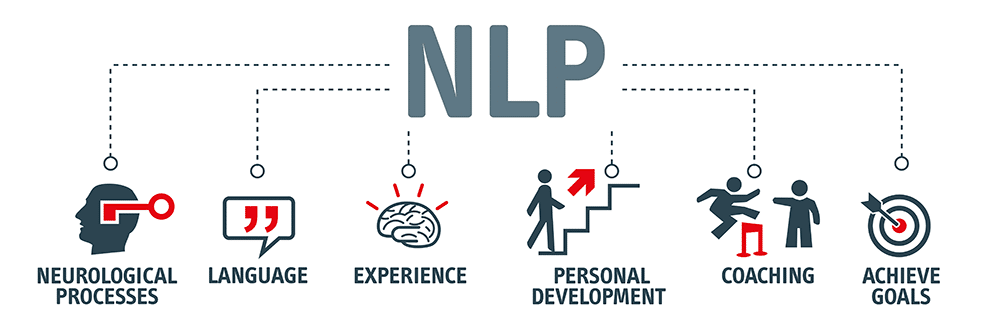
Neuro-linguistic Programming models (NLP models) are frameworks and techniques intended to help people understand how patterns of thought, language, and behavior interact. Developed in the 1970s by Richard Bandler and John Grinder, NLP was influenced by observations of therapists and communicators whom its founders considered particularly effective. NLP models are commonly used in coaching, communication…

In Neuro-Linguistic Programming (NLP), techniques are often powerful, fast-acting, and capable of creating meaningful internal shifts in a relatively short period of time. Whether you are guiding a client through a reframing process, a parts integration, or a future pacing exercise, the ability to facilitate change is one of NLP’s greatest strengths. However, with that…
Continue Reading Why Ecology Checks Are Essential for Effective NLP Interventions

When people begin exploring personal development, therapy, or coaching, two approaches often come up: Neuro-Linguistic Programming (NLP) and Cognitive Behavioral Therapy (CBT). At first glance, they can seem similar—both focus on thoughts, behaviors, and change. But beneath the surface, they are built on very different philosophies, methods, and goals. Understanding the distinction isn’t just theoretical.…

The concept of the “Core Self” is often buried under the noise of daily stress, limiting beliefs, and internal conflict. While many psychological models treat the mind as a single, often broken unit, the Inner Dynamic model—the cornerstone of the iNLP Center’s Mental Health Coach training—presents a more empowering reality. It posits that we are…
Continue Reading The Core Self: Parts Psychology and Neuro-linguistic Programming (NLP)

Navigating the daily realities of raising a neurodiverse child often requires rewriting the traditional parenting playbook entirely. When conventional discipline and standard communication techniques fall short, it can leave parents feeling isolated, exhausted, and searching for answers that actually respect their child’s unique brain wiring. Rather than offering quick fixes or rigid, compliance-based rules, the…
Continue Reading NLP Strategies for Parenting Neurodiverse Children

Co-founder and CEO of iNLP Center
Hope is an accomplished businesswoman and entrepreneur with a passion for empowering others to achieve their full potential.
With a Bachelor of Fine Arts (BFA) from California State University, Fullerton, and postgraduate education at Harvard Business School, Hope brings a unique blend of creativity, business acumen, and personal development expertise to her endeavors.
Hope’s entrepreneurial spirit shines through in her establishment of the iNLP Center, which has become a leading provider of NLP training and life coaching certification programs.